Showing posts with label adoption. Show all posts

Monday, January 25, 2010

School for Newly Adopted Older Children

With new Special Needs adoption lists just coming out, I’d like to continue the discussion of concerns about adoption of school aged children.


We adopted our second daughter, just as she turned 4 years old, bringing her home in December. We gave her the nine months before the next school year to get used to us, get used to the language and take some parent/child classes together. We started her in 4 year old preschool that fall. When we had her evaluated for Kindergarten, the public school system said she was ready to go, their only hesitation being her spoken language and some gaps in language concepts. Since she was making progress in private speech therapy, they felt she could overcome this. Interestingly, the public school would not offer speech therapy, but would consider her for ESL assistance, due to being in the country less than two years.


We ended up placing her in Montessori school in a mixed age 3-5 preprimary half day class as a 4 year old, even though she had turned 5. This allowed her to work on 5 year old activities where she could and still have opportunities to fill the gaps of the earlier ages.


A friend of mine recently brought home her son, just as he turned 6. She enrolled him in kindergarten starting shortly after they were home. He is receiving ESL services. Looking back, I think my daughter would have benefited from starting school right away, rather than waiting.


If you have adopted an older child, what age and what schooling decisions did you make? Which ones worked and which ones did not? What advice would you give to parents just now bringing home a school aged child?


Guest Blogger

Nancy Williams

HR Associate Director

Love Without Boundaries

Thursday, January 21, 2010

Searching

Last week Zara Phillips and DMC released a music video for their song “I’m Legit”

They released this song last spring, to bring awareness to closed birth records in the US. Both Zara and DMC are adoptees who have done a lot to promote adoptee rights and adoption awareness. Only eight states, within the U.S., give adoptees rights to original birth certificates.

When DMC was 35 years old, he found out that he was adopted. Trying to come to terms with his beginnings, he filmed a documentary called
“
DMC: My Adoption Journey” which won a news and documentary Emmy for Outstanding Arts and Cultural Programming. In addition, he wrote his song “Just Like Me” about adoption.

He said this about his song, “I wrote this song for all members of the adoption triad. I want people to get rid of the shame, and secrets. Adoption is about love.”

Zara is an author, singer and songwriter from the UK. She wrote a book “
Mother Me” written about her view of motherhood from an adoptee’s point of view. In this book, she explores relationships between adoptees and birthmothers. She is quoted “It seems that birthing my children was also a birth for my whole self”. She is also just finished directing and producing an adoption documentary that discusses the lifelong impact of adoption, “ROOTS: UNKNOWN”. This is currently being screened in both the US and England.

How wonderful it is that adoption can be main stream and discussed so openly. With the joy that adoption brings, there is also pain. I give both of these artists a lot of credit for sharing their personal stories.

I will leave you with one of the questions that Zara hopes that her documentary will try to answer, “What does someone touched by adoption need in order to feel emotionally whole?” I think that both DMC and Zara are showing us the way they are doing this. What do you think this might mean to you and your family?


Karen

Friday, January 8, 2010

Photo of the Week - Amazing Changes


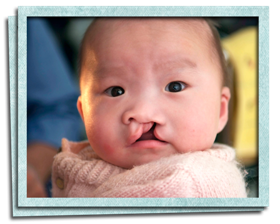
This week, two little babies had their lives changed forever by a simple surgery. Both of these children had severe bilateral cleft lip and palate. In less than two hours, their lives were transformed. Thank you to the amazing cleft surgeon at Anhui Children's Hospital who performs these miracles everyday. Both baby Ronnie and baby Paul will now have a wonderful chance at finding a forever family....amazing!

Wednesday, December 30, 2009

Finding Birthparents

On Monday, The LA Times ran an article called “Adoptive families' quests to trace Chinese roots often meet dead ends”

This article featured one family who went to China and within minutes of putting up a poster at their daughter’s finding site found her birthparents. At the same time there are success stories, there are also stories of failures. Another family featured in the article has traveled to China 13 times and has yet to locate their daughters’ birthparents.


Changfu Chang, associate professor at Millersville University in Millersville, Pa has created a number of
documentaries about adoption in China. In the LA Times article, “Chang says he knows of perhaps 20 adoptive families who have located birth relatives of their children, a minuscule number considering the more than 60,000 Chinese babies adopted by Americans since the early 1990s.”

Have your children asked you to find their birthparents? Have you travelled to China to look for your child’s birthparents or are you planning to? If you have gone, what did you do to find them? If you are thinking of going, what are planning to do to find them?


Karen Maunu LWB

Monday, December 7, 2009

What are You?

Saturday night, I watched the movie “Grand Torino” with my husband. I loved how in this movie, the character Clint Eastwood plays starts out very racist regarding his Hmong neighbors but in the end, gives his life for them. He asks them to go back to where they are from and doesn’t believe that they are American. As a veteran in the Korean War, he viewed all Asians as bad, especially his neighbors. I loved how at the end of the movie, he pins the silver star he earned during the war onto the neighbor boy Tao, really symbolizing how they are connected and that he saw him as American too.

In addition, a friend was telling me recently that in the year 2050 the Caucasians/Non-Hispanic whites in the US will become a minority. I found this article "Caucasian Race in the United States to be the Minority in 2050" that Reuters is predicting that by that time, this population will account for 47 percent of the population.

NPRs Melisa Goh recently did a story called “What Are You? The Answer’s Not Black or White” about being raised multiracial and how being mixed, with a white mother and an Asian father, that people didn’t know where she fit. She also talked about conversations can easily slip from race to nationality.

She went onto talk about a bumper sticker on her cousin’s car that read, “Somewhere in Kenya, a village is missing its idiot”. She responded this way:

But this jab struck a tender spot. He sees the sticker as a purely political matter. I see it as unquestionably racial. I drew blood when I pointed this out, and our conversation took that ugly turn.

But for me, those who question President Obama's citizenship are sending me a personal message: If your father came from somewhere else and isn't white, then you may not be American enough. To them, I'll always be an outsider.

Thing is, my cousin's husband isn't one of those people. Far from it. He and my cousin have adopted three Chinese orphans. He'll never, ever tell them they're not as American as their blond, blue-eyed brother — and I wouldn't dare anyone to try.

He has heard people say his children should go back to where they came from, and he has always put a stop to it. So I don't understand what's so funny about that bumper sticker.

She goes onto say:

Turns out, "What are you?" isn't a question for just funny-looking people like me. It's a question each one of us has to answer. And that answer, for all of us, isn't black or white.

What makes an American? Do you look at the color of someone skin and wonder where they are from? Have you ever made false assumptions regarding someone’s race and their nationality?

Karen Maunu

Monday, November 23, 2009

"Find My Family"

I was recently watching TV with my girls, and a preview for “Find My Family” came on. This new show premiers tonight on ABC. They sat mesmerized as birthparents and adoptees were reunited. So many thoughts came into my head, but the first was so sad that a day like that would never be able to happen for them if they wanted it and then I felt sad for the people who had been filmed. To me, this event should be private and not be made into reality TV. I looked at my girls, wondering what they were thinking. When it was over, I asked them how the show made them feel, and they both answered “Good!”

With the enthusiasm that I heard from my girls, I now wonder if this is a show they should watch – my girls are 9 and 11. I wondered if this kind of a show would promote good birthparent discussions or if this show would cause them more pain. Martha Osborne from “Rainbow Kids” had a great commentary on her website about this show.

Her first point was based on the show’s tagline. “With the tagline Some people have spent their whole lives searching for the one thing that matters most... Their wish will now come true. Let's find your family, producers completely discount any worth of the adoptive families who have loved and raised these children. Instead the show emphasizes the loss of a child's ‘real family' as the one-and-only central issue of all adopted children's lives.”

She goes further to say that, “Unfortunately, the general public's opinion and understanding of adoption is largely shaped by the media. ABC's exploitive new series will focus on the most extreme issues in adoption, and is sure to have an effect on how our children's teachers, extended family, and friends view and accept adoption.”

In her article, she writes that younger children should not watch this show because it focuses on adult emotions, but that parents should empower their children by using the Wise Up! Workbook . For upper elementary school and middle school, she advises some discussions with children around birthparents and identity, media and marketing of ideas, their feelings around these issues, and how others may start asking them intrusive questions because of this show and how to handle them.

Have you see the previews for this show? What are your thoughts about letting your kids watch it? What will you do to prepare your kids? If your children are older, even if they don’t watch this show, are you going to be proactive in preparing them in how to deal with possible questions as this show becomes publicly known?

Karen Maunu

Wednesday, November 4, 2009

November - National Adoption Month

In celebration of National Adoption month, we would love to hear your stories about what adoption has meant to you and your family. Even if you are someone who has just considered it or knows someone who has adopted, we would love to know your thoughts.

How have you been touched by adoption and how has it changed your life? What were your preconceived ideas about adoption and have they changed? What surprised you the most about adoption?

Monday, November 2, 2009

Mommas Can Worry, Can't We?


I was recently forwarded a link to a blog on the Rumor Queen site called “Hard Knock Life.”

I have been there and done that on wondering about how my daughter would feel singing the words to this song about life in an orphanage. She was in a production of Annie two years ago, and was given the part of one of the orphans who has to sing this song. I remember her coming home from the first rehearsal very excited, telling me that she got to be an ORPHAN and that they were going to need tattered clothes and rags to wipe the floor. The interesting part to me was that she didn’t react to any of the words in the song. For those of you who have seen any videos of my daughter singing, you know she has an amazing stage voice, and she thought it was great to belt out “no one cares for you a smidge, when you’re in an orphanage.” She sang it with great conviction, without a single reaction that the lyrics bothered her. Her only concern was getting the dance moves just right. When I questioned her on whether the words bothered her in any way, since she had herself lived in an orphanage, she gave me that “moms can be so clueless” look and said, “mom…it’s a play, as in fiction.” End of conversation in her mind.

Reading this blog post today, however, did make me think about how concerned I always am about anything that could hurt the feelings of my kids. When we first adopted our son with a limb difference, I remember watching Toy Story 2 and then actually throwing the DVD away when one of the characters says something about a one armed toy being worthless (I can’t actually even remember the exact line, but I remember audibly gasping and putting the DVD in the trashcan immediately....yes, I really did!) Ditto the movie “Hotel for Dogs”, which had a three legged dog that someone also called worthless. I remember thinking that TJ could never see it as it might hurt him in some way.

Fast forward a few months later and TJ is at a play date with a friend. The mom dropped him off later that night and said, "oh…we went to the movies and saw “Hotel for Dogs”. My heart sank fearing the worst. When TJ came in I asked him about the movie, and he told me again and again how much he loved it. I carefully padded around the issue of the three legged dog, to see if anything had bothered him, and just like Anna singing “Annie”, nothing he saw had bothered him at all. He thought the three legged dog was cute…nothing more, nothing less.

My older kids accuse me sometimes of being “hyper vigilant” when it comes to issues about adoption or special needs that might hurt my kids. What I’ve noticed is that the things that I most think will bother them rarely do, and then the things I never even considered can bring out real grief and sadness. I still remember seeing “Prince of Egypt” with my daughter, a movie I thought she would love, and then having her sob inconsolably when Moses’ mother floats him down the river away from her. That image touched something inside of her that I hadn't imagined. It made me realize that it is impossible to protect my children from every image or event in life that might cause them pain over their adoption. But we as moms sure want to try, don’t we?

Have there been movies or songs that have affected your child in ways that surprised you? Are you also a hyper vigilant mom when it comes to trying to protect your child?

Monday, October 5, 2009

Disruption

Last week, I saw this article about a woman who was on the Today Show, who adopted a child and later terminated the adoption here. The woman and her husband had five biological children and then adopted a baby boy. However, because the mother felt that she couldn’t bond with him like she could her biological child…..after 18 months they disrupted.

The subtitle on this article was “Of human bondage” and there are five pages of editorial comments on both sides of this story.

I have struggled with the idea of disruption for many years. When a child is born into your family, whether the child has “issues” or not, that child is yours. You don’t have an option to hand that child back. I know that this is a very complex subject, however, and with my motto being “Compassion before judgment” I try very hard to understand disruption when it happens in adoption. In our own extended family, there was a disruption of a child that I knew well….so I have seen this with my own eyes.

What are your thoughts on disruption? Is there ever a time that it is acceptable? In the end, was it better to have a family that will truly cherish this child or would it have been better for this family to fully commit to the child and work on bonding?

Karen Maunu

Changing the Lives of Orphans in China

Tuesday, September 29, 2009

Article on Children from China Seeking Their Roots

We wanted to pass on this article about Chinese adoption and children returning to their homeland in case you haven't read it yet. We agree with the author that the vast majority of children in China's orphanages now have some sort of medical need. In fact, it has been reported that 4 of every 5 babies now abandoned has a medical condition.

I hear again and again from people that China is no longer a country to consider for international adoption. That couldn't be farther from the truth! The waiting child program is still a wonderful way to form a family. Most adoptions can be completed within a year, and so many INCREDIBLE children are waiting right this moment for a loving home....children just like my own son....who brings me more joy than I could ever imagine. For more information on waiting child adoption, watch our video here.

Amy

Wednesday, September 23, 2009

Adoption and Divorce


When we adopt a child, one of the issues that we want them to understand so clearly is that they are now in a PERMANENT family. We know that every child who has been separated from their birth parents has already experienced a significant loss, and so I think most of us try to assure our children that their new family is forever. We want our children to feel the security of our love and to believe that we will always be there for them. I know with my own children, I’ve used the word for family from the movie Lilo and Stitch as a private “promise”. We’ve said over and over to each other that “Ohana means family”, and as I would tuck them in at night I would assure them that family is forever.

But what happens when family isn’t forever? What happens when divorce occurs post-adoption? How does that impact a child who has been told again and again that their family is permanent and secure? Very little professional advice can actually be found on the internet about this topic, but it is definitely an issue that occurs, with the divorce rate in America remaining at 50%. Has this been an issue that’s touched your family? How have you helped your child understand that even though your marriage might have ended, your love for your child is indeed permanent?

Saturday, September 12, 2009

Photo of the Week - I Just Can't Wait


Two months ago we learned that one of the children, Chelsea, was going to be adopted from our Fuyang Foster Care Program. Wonderful news but we were sad for Finn who has been her best friend since they both entered the program in February of 2007. They share the same foster parents, went for their cleft lip repair surgeries together and recently had their palate surgeries together. They eat together, fight with each other and love each other. A week we learned that Finn was to be adopted, not just adopted but was leaving on Sept 10th. We are so happy for both Finn and Chelsea, who now have their own forever families!

Monday, August 24, 2009

Identity - Who Am I?

Over the last two weeks we have celebrated two different milestones with our daughters. One of my daughters celebrated her family day and the other celebrated her birthday. These two milestones have spurred many discussions about birth parents, China, their orphanages, and adoption. They are at a point in their cognitive development that our discussions have incredible depth.

Wanting to understand and help my daughters deal with these issues, I began a search for articles on identity. I found a really interesting article called “Anticipated Times of Identity Sensitivity” here. Looking back on our most intense discussions on birthparents, adoption and family, I can fit these conversations into one of these categories. This list will be helpful to me in the future as other discussions come up.

In addition to this list, I found one of the most complete blog articles on issues surrounding Adopted Asian Americans here. This article is really long but covers many topics including historical/sociological background, questions on legal status of orphans, how adoptive parents deal with racial differences, and cultural and identity issues faced by Asian adoptees. I found this article extremely insightful on so many levels. I was happy to read the statement saying that “research is emerging that suggests that Asian Americans who straddle diverse sets of cultures are happier and report less stress and anxiety when they create their own definitions for fitting in and actively shaping their own identity…”

Have you found certain times that your children deal with identity issues? How have you handled them? How are you dealing with your children’s racial differences? Do you see yourself parenting your children to be “normal” but white centered? Are you educating your children on Asian American issues?

Karen Maunu

Hope and Healing for Children in Need


Wednesday, August 19, 2009

Role Models


Experts in transracial adoption frequently tell adoptive parents that one of the most important things they can do is to surround their children with people from their same racial heritage. We are told to find role models, so that our children are not growing up completely separated from their birth culture.

I want this for both of my children, as I agree it is very important. However, recently I was speaking with a friend about how to exactly go about doing this, especially in our town which is predominantly white. We both admitted that it feels somehow “wrong” to be actively searching out Asian people to befriend based on their race. My friend said that she understood completely that her daughter needs Chinese people in her life, but she still felt uncomfortable with the thought of walking up to a stranger simply because they are Asian and saying, “hi, do you want to be my friend?”

So my question for those of you who have successfully done this is HOW did you do it? Were there local resources you used to help find mentors? Were the people you approached understanding about what you were hoping for? Have you used college communities to search for role models? Thanks for any and all advice you can share.

Amy

Tuesday, August 11, 2009

Back to School Anxiety

My kids have all been talking about school starting. As much as they are so excited to go back, there is also some anxiety related to the start of school every year. This year is no exception.


I found a couple of great articles that have some great ideas on how to ease the transition into school. The first one is here by Dr. Daniel Klein. He has some great ideas, including talking about back to school fears, creating a calendar, visiting the classroom and teacher, talking to your child about friendships, and beginning the back to school routine early.


With adopted children, back to school anxiety can be especially hard, especially when trauma is involved. Anxiety can be increased, especially during life transitions. This wonderful article by Becky Wilson link discusses these issues and gives some great suggestions. Taking your child’s anxiety seriously, communicating with your child’s teacher and openly talking about fears are the suggestions that this article gives.


What has your family done to make the school transition in the fall go more smoothly?


Karen Maunu

Sunday, August 9, 2009

Primal Wounds?

When a child joins a family through adoption, there is much joy surrounding this event. With each of our daughters’ adoptions, I can’t think about these events without getting teary eyed. What a gift our family was given on these days. We are so lucky to be able to parent these exceptional children.

Earlier this summer, I heard a great sermon on adoption at church. The summary of the sermon was that adoption is a joyous and wonderful event, but to get to that point, some sort of hurt was caused for the adoption to occur. As a Christian, this is adoption into Christ’s family through his crucifixtion, in terms of adoption in our world, it was the event that led to the point that adoption was the best answer.

This past week, I read one of the most heart-wrenching letters. It was a letter from an adult woman to her birth mother on her abandonment here. As I read this letter, I couldn’t help but wonder what kind of letter my own children might regarding their circumstances. The hurt that this woman felt really touched me deeply.

How much do you talk with your children about their life before they joined you? Do you evern mention the reasons or possible reasons for the events that happened before they joined you? How do you feel about the "primal wound" idea that children who are placed for adoption have an inner hurt that might be with them always? What can we do as adoptive parents to help our children come to the best terms with their adoption?

Karen Maunu

Monday, July 27, 2009

How Do You Talk About Your Child's Adoption Story?

Recently I was talking with a friend who is also an adoptive mom. She was telling me how open her entire family had always been about the topic of adoption, and how she frequently shared with others about the joy she felt when she received her girls, how they reacted, and how the days that followed their initial meeting went.

She told me, however, that recently as she discussed her older child’s adoption, she saw for the first time real hurt in her eyes. She said she stopped to briefly talk to her about what she didn’t like and then had a longer talk with her after the friend left. She was surprised to learn that there were parts of her daughter’s story that really bothered her, namely her reaction upon meeting her family and all of the grieving she did in the days that followed. My friend said that seeing her daughter’s pain made her feel horrible, as she had no idea that there were parts which hurt her so much.

How have you dealt with what is acceptable to talk about and what isn’t with your family’s adoption story? Of course sharing an adoption story can encourage others to adopt, but can talking openly about your family’s story sometimes be at your child’s expense? How do you best find out which parts of your child’s story bother them and what they are comfortable speaking about in front of another person? My friend said she never wanted to hurt her daughter like this again, and she wondered if a parent should just stop talking about their child’s adoption story altogether?

Karen Maunu

Monday, July 20, 2009

Family


The following blog was posted two years ago, and a conversation this weekend reminded me of it.

My son TJ was adopted when he was 2. He had lived in the orphanage his entire life, and so he had never known what it was like to have a mom or dad to love him until the day he was placed in my arms a little more than a year ago. I wondered how long it would take for him to learn his place in our home and how long it would take for him to understand that we were now a FAMILY and that he was our little boy.

TJ loves animals, and he loves collecting miniature plastic ones from the zoo or from toy stores. One day when we were out shopping together, he kept trying to place two zebras into the shopping cart, and I kept insisting that we would only buy one. TJ became so upset when I put the other one back, and cried all the way out of the store, trying desperately to tell me why he needed both, but since he only had a few words in his vocabulary at that time, it wasn’t working. I kept assuring him that he only needed one, and he kept stretching out his arms and pointing to the back of the store hoping for the other.

Every time we would go into another store with animals, he always would try to buy two. Mom (being thrifty) would always say “we only need one panda”, or “TJ, you should be happy with one cow”.

It wasn’t until his language began to take off that I FINALLY understood the depth of TJ’s desire to always have two animals. One day he was carefully searching through his bucket of animals until he found two lions. He put one up on the table first and said “baby” and then with great care he put up the second, right next to the first, and earnestly said, “MOM”. He dug some more into his bucket and managed to find two elephants and once more he placed the first one on the table and said “baby” and then gently sat the larger one down near the first while saying to himself with great relief, “MOM”.

TJ had learned so quickly that babies need moms. And that was the source of his distress when I would only allow him to buy one animal. He had been trying to tell me even at age two that his baby zebra needed a mommy. How could I not have seen that? Now we always buy our animals in families. Because TJ is so concerned that everyone needs a parent to take care of them.


This weekend a question was raised at a meeting I attended on whether children who once lived in institutions have a deeper sense about what it means to have a family. What do you think? Can that awareness have both positive and negative implications? For instance, do your children have a heightened fear that something could happen to you someday? There is such a fine line for many children in understanding what it means to be part of a family while at the same time not ever being made to feel like they should somehow be grateful for being adopted.


Amy

Monday, July 13, 2009

Parenting Institutionalism

We have five children who are all so different. I love watching them all grow; watch their personalities and ideas form. Parenting is one of the most wonderful things that we have done, but it also can be one of the most challenging.


I saw this quote over the weekend and it has really made me think - "If I raise my children well, it doesn't matter what I don't do well. If I don't raise my children well, it doesn't matter what I did right" Jacqueline Kennedy Onassis


In parenting both biological and adopted children, we have dealt with many different issues….some just general parenting issues and others that are rooted in the fact that two of our children were institutionalized for 2 ½ years. When dealing with the issues that have come to us during our parenting years, we discuss and research the best way to deal work through these.


I have always had a nagging thought in the back of my mind with my daughters who lived their early years in an orphanage, are the issue we are dealing with related to their early years or just a regular stage that they are going through? This has challenged me in new ways.


Do you ever get to a point when raising a child who is adopted and was institutionalized where you stop wondering what the root of the parenting problems are? We just want to handle the issues best if they aren’t normal parenting issues. Have you found good parenting resources to weed through these questions? How long does institutional affect behavior? Forever? Thinking back to that quote….I just want to find the best way to raise my children well….


Karen Maunu

Tuesday, July 7, 2009

Family Tree


There was a time many years ago that I was fascinated with my family's genealogy. I poured over Census documents and Ellis Island ship records, and each time I could take my family tree back one more generation, I would have a little jolt of excitement go through my body. With a maiden name of Flynn, I would imagine my Irish relatives and what their lives were like “back home”, and so it was fascinating to me to eventually weave my ancestry back to Germany and Bavaria as well, and never did I dream that my family tree would actually start with a love story in France in the 1600s. I would meet people online in my research who were part of the same family trees, and we would trade information and sign our letters to each other “your distant cousin.”

And then I was blessed beyond belief to adopt my two children from China. And the family tree became a whole lot more complicated for me emotionally. Of course my children are listed proudly under my branch as my much loved son and daughter. But now when I look at the complex chart that essentially traces parts of my DNA back hundreds of years, I have an empty feeling inside that there are essential people missing now on our tree. My children’s birthparents deserve to be on there. And I am uncomfortable now that I have the knowledge that my great, great grandmother was a seamstress or that my great, great grandparents on my dad’s side were married at just 18 in Ireland before getting on the ship to America. And yet I cannot even give my own children one piece of information about their parents who are most likely still living in China.

Last night I was googling “adoption and family trees” and I found an article on a blog called “Harlow’s Monkey” that really touched my heart. The author was adopted from Korea, and she talks about the issue of genealogy and how it really surfaced for her when she became pregnant with her first child and was given a baby book that had “two solid pages of family history waiting for my pen to fill in the blanks”. She used her adoptive family’s information, but then she wrote these lines about her birthparents’ history:

“However there are spiritual blanks where the Kim family’s names should be. I see the personal history and family I don’t know as the shadow of my family tree – not the big leafy one represented by my adoptive family and their history, but as the strong silent presence fluttering behind it.”

When I read her blog, I realized that is exactly how I feel now about our family tree. There is a shadow now, a very real emptiness that I wish I could fill for my children’s sakes. I wish I could tell my daughter with certainty that her dad was a student or her mom was a farmer. I wish I could meet them and learn the history of their family line as well. There are very real leaves missing on our family tree now, and I want to make sure their importance is part of our family history as well.

Has your family discussed the issue of family trees? What have you talked about and how have you adapted yours post adoption? Do you include all of the people in your children’s lives, such as foster parents and caregivers who were so much a part of their lives as well?

Amy